
elsewhere, otherwise
UBC MFA Graduate Exhibition

This is another in our series on art on and around campus. Previously stories have considered the wall sculpture by George Norris, the beehive burner paintings by Lou Englehart, a sidewalk mosaic, and public art installations on Main Mall among other stories.
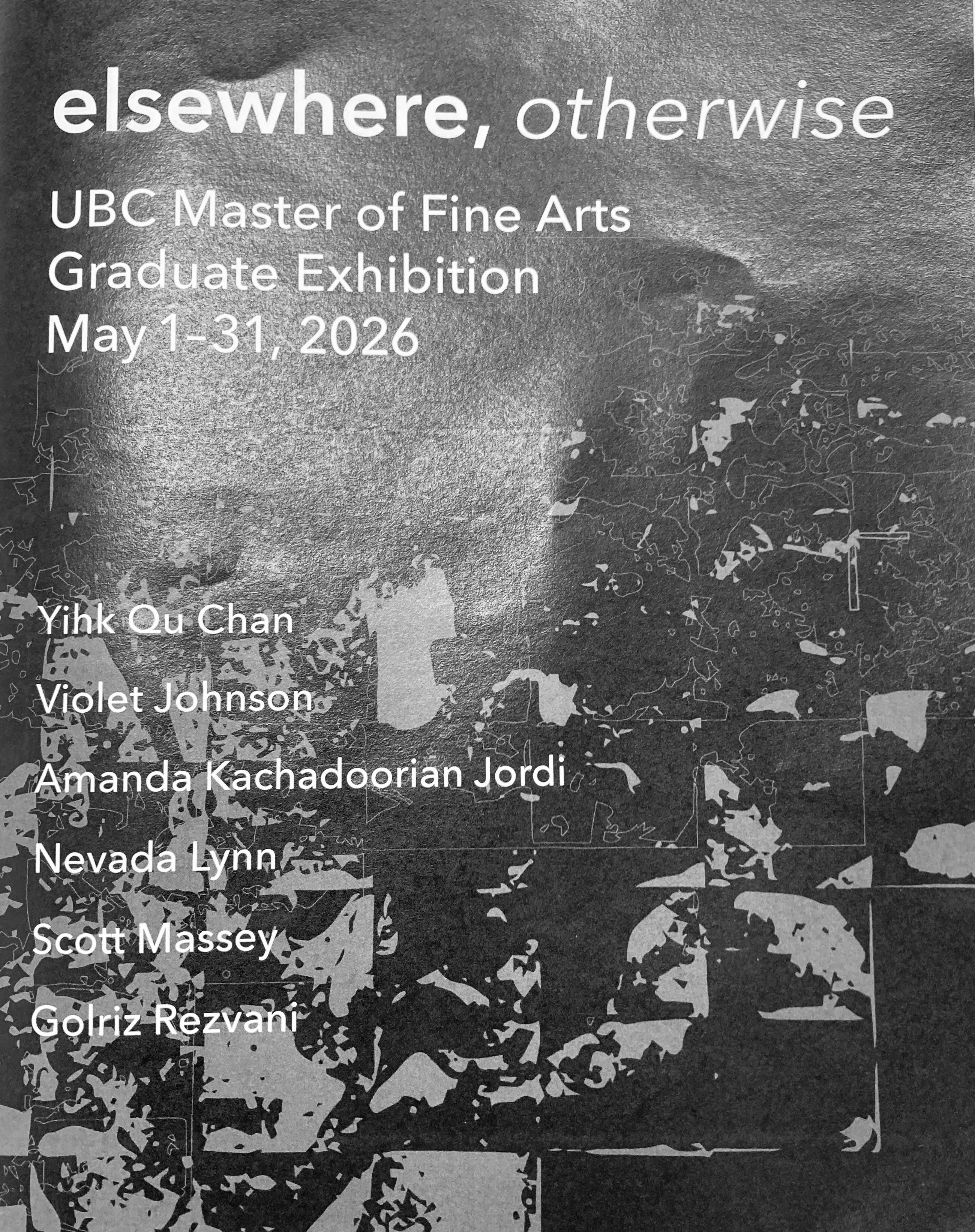
My UBC colleague Gareth James offered to show me around an exhibit of work by UBC’s MFA graduates. I first met Gareth while I was writing a series of stories on UBC’s Old Fire Hall. Gareth’s studio was then in the Old Fire Hall.
Having just finished a series on north coast artists and reflecting on a print I had purchased in the early 1980s from a show of UBC fine arts grads, I asked Gareth if such shows were still being held. He told me yes and invited me to join him on a tour of this year’s MFA show.
So that’s how I ended up at the Belkin Gallery late one Tuesday afternoon in May, 2026.
The Tour
The tour was less tour and more conversation. I will confess to finding it hard to know where to start with contemporary installations such as I was witnessing. Gareth resisted my attempts to pigeon hole him as an expert on art - he is (both on the subject and as an artist), but more importantly his desire was for me to experience the work as I came to it.
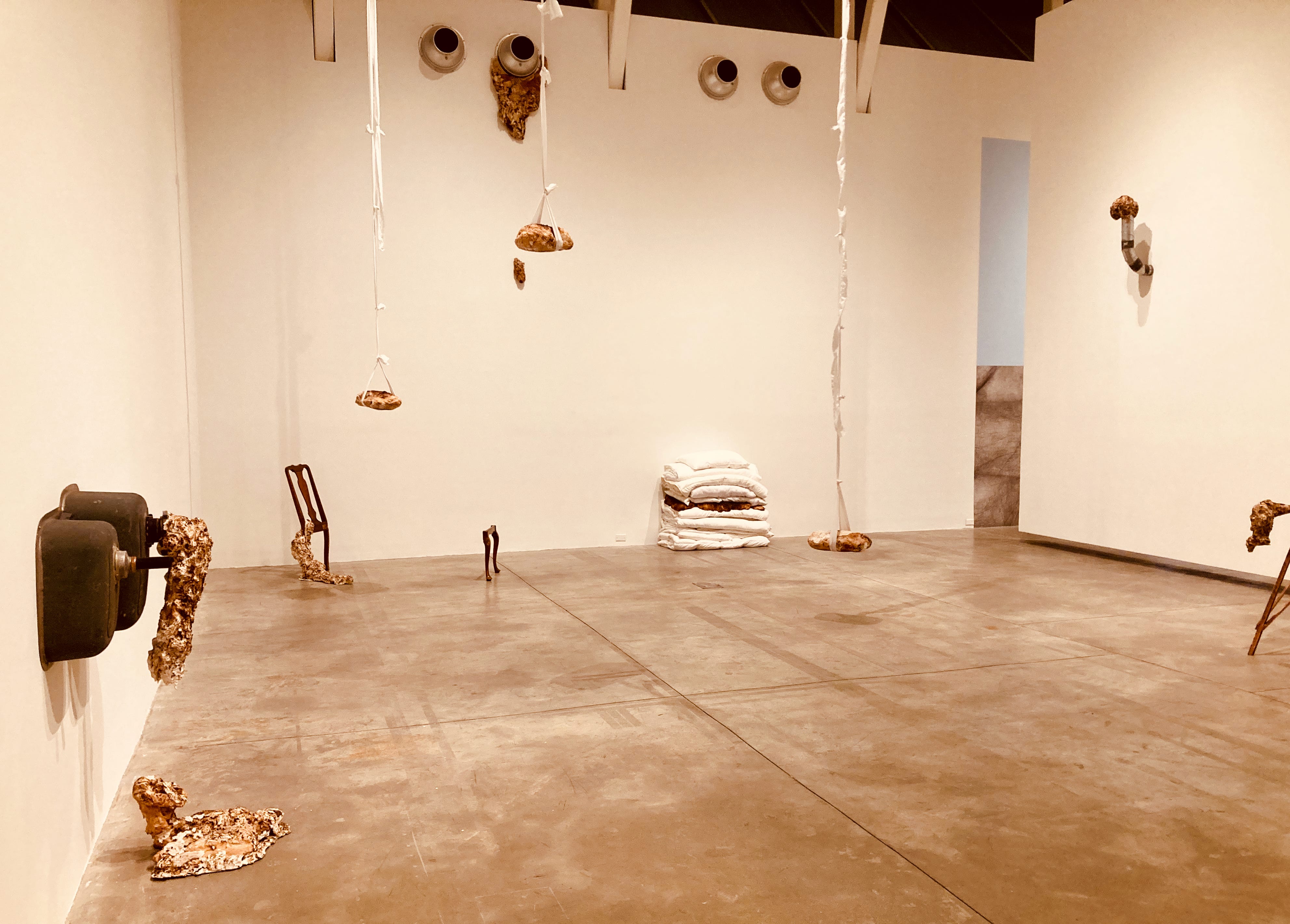
The first work occupied an entire third of the main gallery. As we walked into it, Gareth said nothing. He paused, edging in slightly to my side as I tentatively stepped into the room. I wasn’t sure where to look. I glanced toward Gareth. He stood still. I turned to the different objects hanging from the ceiling, placed on the floor, and attached to the wall.
I felt out of my depth. What am I looking at. I see a sink stuck to the wall with something extruding from it. I see a wooden ironing board, a chair split and placed in a way to make it look like a bed (suggested by a pile of mattresses and a pillow nearby). But, it’s the hanging bread that keeps pulling me in. I move up to a loaf suspended barely off the floor in the middle of the room.
“What’s to stop me from touching it,” I ask.
Yes, Gareth conceded, that’s a question in such a place. I related an incident of a class I had taught in UBC’s Museum of Anthropology many years ago. My class was spread throughout the museum in discussion clusters. One cluster had attracted the attention of several museum staff who were rapidly descending upon them. One of the First Nations students, a man slightly older then myself turned to me as I came up and said with a mask in his hands, “I’d wondered what our uncle had done with this.”
Gareth and I talked about the idea of belongings, ownership, and protocol in museums. Who sets the rules and enforces them. When do we know when to break them or keep them. But Gareth still wouldn’t explain the installation.
I turned back to the bread. It looks like it may have had the potential at some point in its life to be edible. I’m tempted to tap it, but restrained myself. That’s when I notice all the brown bread-like pieces extruding, flowing, sticking out of things. I turn toward a sign I had barely glanced at on entry. It has the title, artist’s name, and the materials: “water, salt, flour, yeast ….”
“So it is bread,” I say.
Gareth replies by telling a small bit of the artist’s background and the experiments they made along the way to this exhibit. I take in all the chunks of bread, only a few formed into recognizable loaf shapes. I look at the metal pipes on the wall. I vaguely recalled them as part of the building, but there is bread draped around one of them.
“Are those pipes part of the installation or the building?” Part of the building Gareth confirms, but then we both discuss how the artist pulled them into the work. I’m compelled by this work, but as I write I wonder if it’s the installation’s situation as the first I encountered or something intrinsic to the encounter that speaks so loudly.
Our conversation turns toward aspects of conceptual art.
“Conceptual art is art for which the idea (or concept) behind the work is more important than the finished art object. It emerged as an art movement in the 1960s and the term usually refers to art made from the mid-1960s to the mid-1970s” (Tate Gallery).
By way of explanation Gareth tells me about Art & Language, a conceptual art group originating in the 1960s and their desire to break art free from convention. To step away from the trained eye and the sensibility of being part of a guild of experts. I surmised it was a way to connect with an audience willing to engage, to work out what they are experiencing.
“That’s a bit of work” I quipped.
As we talked we moved into the next gallery. We sat down on what looked like old YVR waiting room seats. “They’re actually from Kelowna,” Gareth said.
From a distance the concrete impressions and grey photos are compelling against their grey-blue background. Up close there’s too much detail for me. It’s not until later, after I look at the photo I took from the back of the room, that I can sense the work holistically.
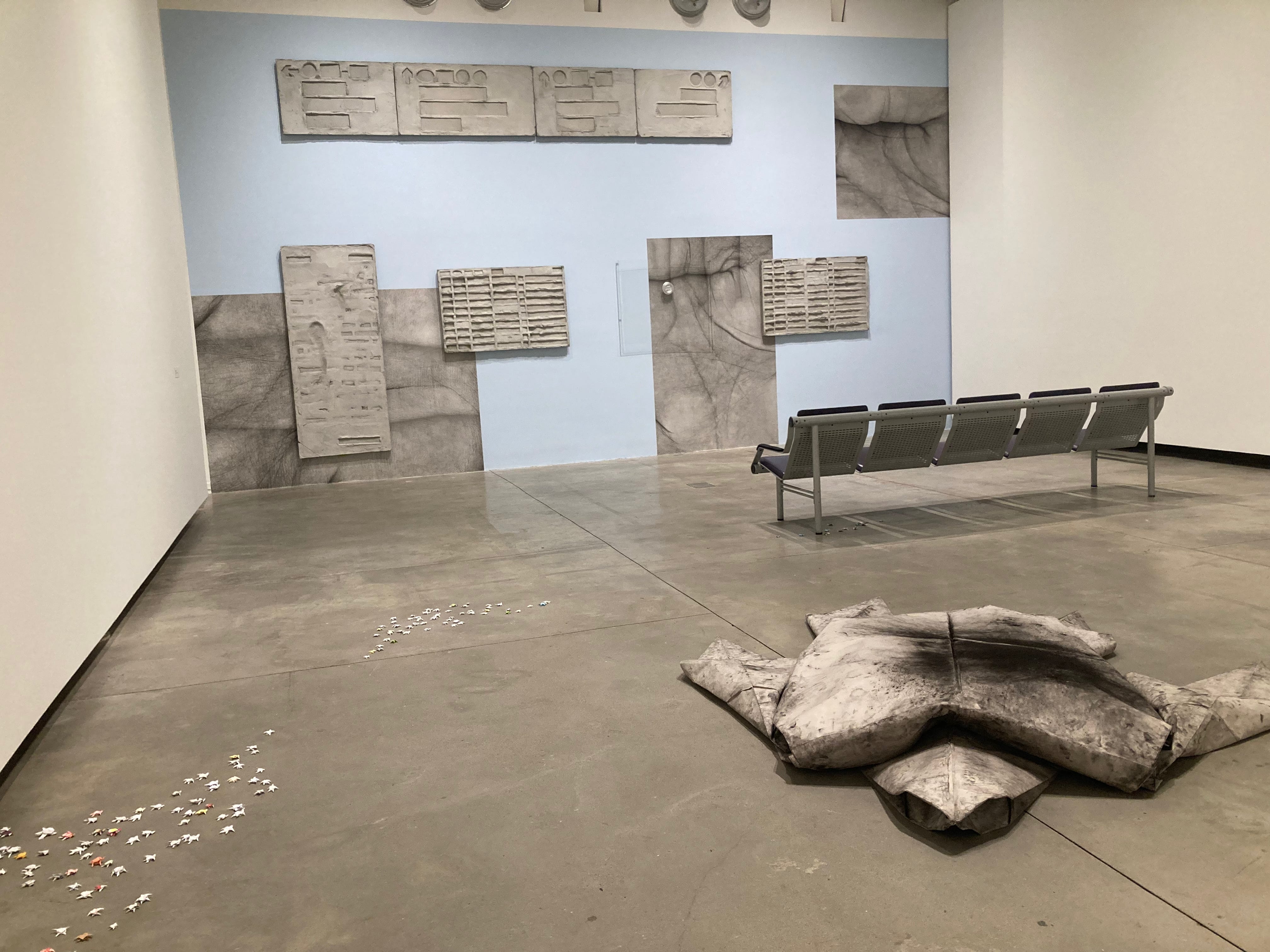
I stood up and walked toward what looks like a giant grey origami turtle. When I stare more closely at the stream of small paper turtles I could see they have been used before. I can only imagine how much time went into to folding the turtles. I wondered (but didn’t ask) if the artist had folded them all by themself.
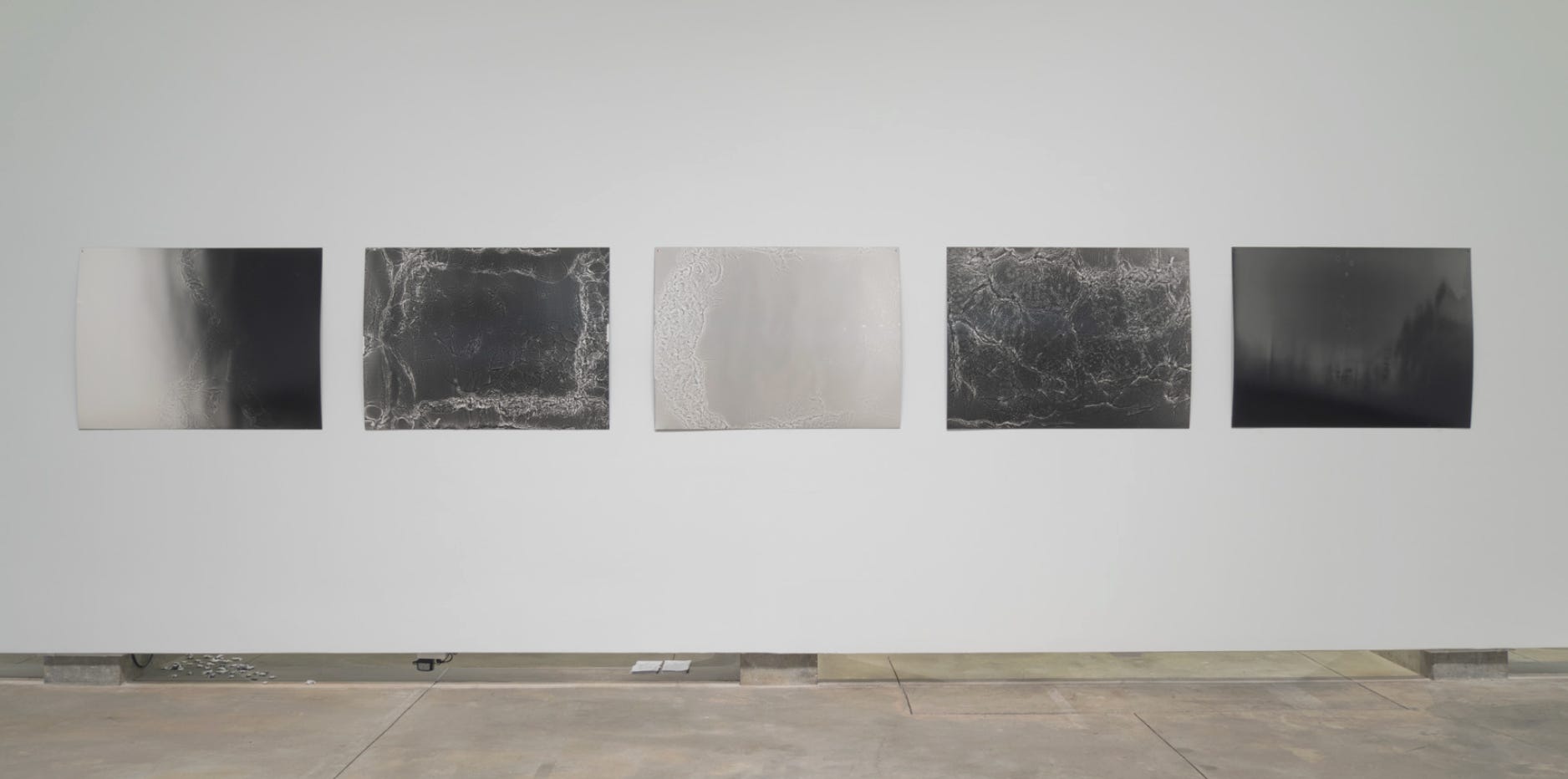
Violet Johnson’s Eternal Tides uses a photographic technique to create images in the studio. When I first looked at the work I thought the images were blow ups of microscopic cells. Instead, I learned these images are made from putting water on photosensitive paper, flashing light, and then developing them. The water used was collected from places of significance to the artist.
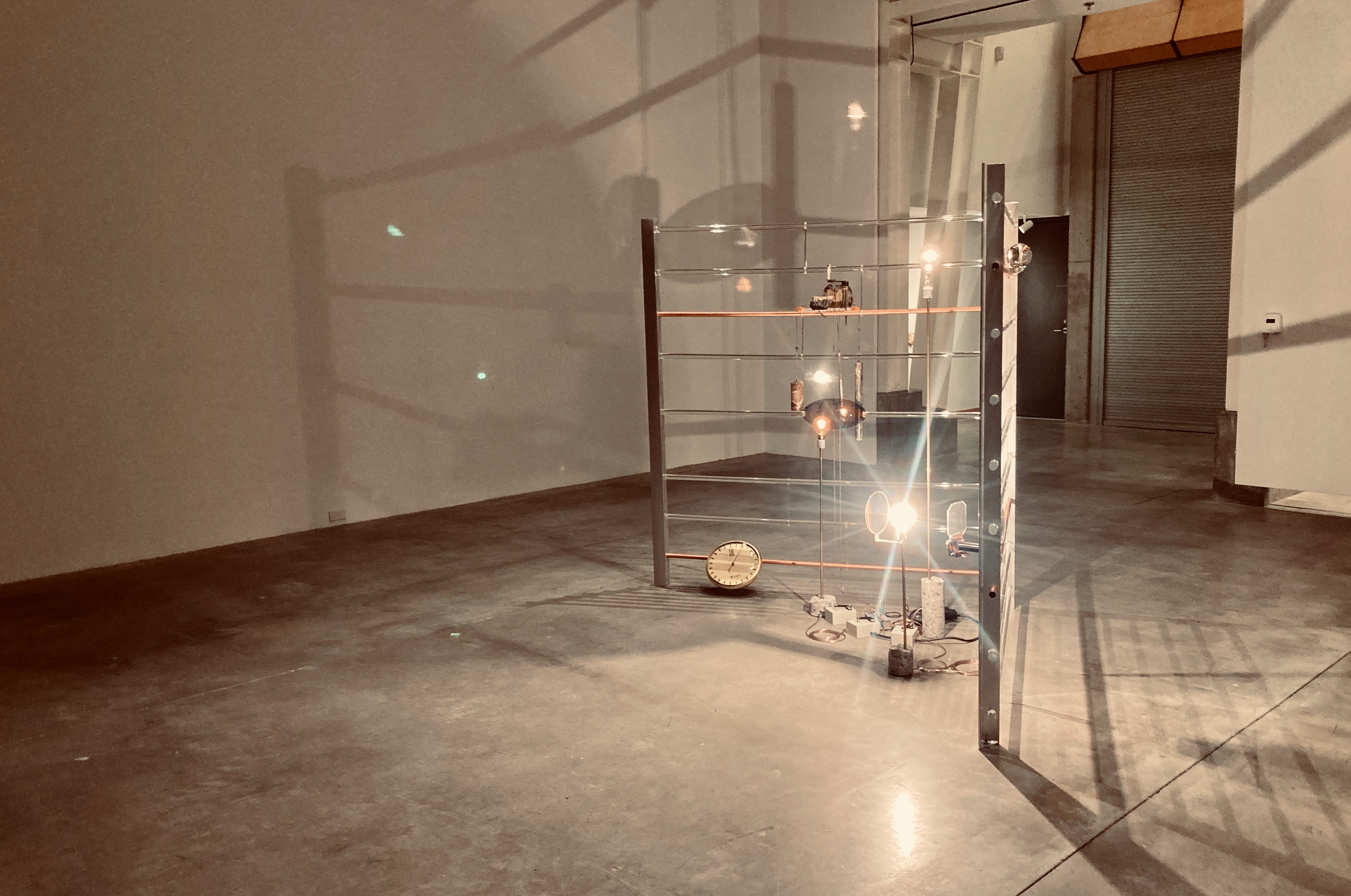
The last work we looked at was Scott Massey’s The Fields That See. It is a frame of metal and plastic through which, and from which, light is projected. The result being to move the space occupied by the work beyond it’s specific material presence.
The tour took over an hour. Even so there was more to see that I missed. I suspect had I walked through the exhibit solo I may well have made a quicker trip. I would have ‘seen’ everything, but would have missed more. Slowing down, using the works as inflection points in our conversation shifted the dynamic of my walk through the exhibit. I’m unsure of whether I ‘got it’ or not, but walking the galley with Gareth gave texture to the experience that I would have missed by myself.
Returning Solo
On the last Friday of May I returned to the Belkin after chairing a PhD exam nearby. My last visit ended before Gareth and I could visit each installation as we took so long walking the gallery that the Belkin had closed before we were done.
If one turns right, rather than left at the entrance, Nevada Lynn’s work greets a visitor.
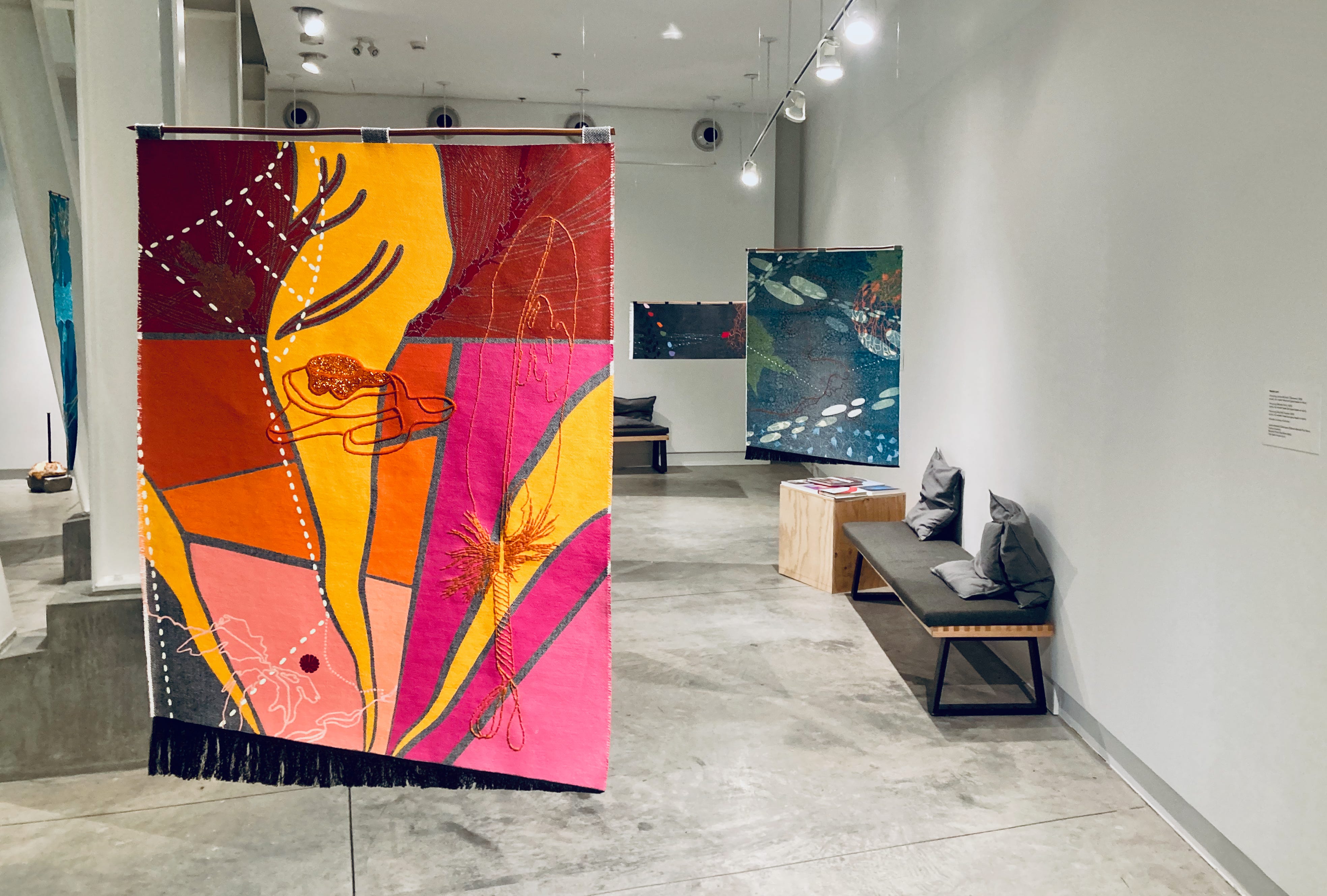
Nevada Lynn’s pieces use beadwork, appliqué, and references to tapestry art. This was the most representational of the works with images of birds, fish, and other animals clearly in sight. At the same time it brought to mind the abstract work of early 20th century Dakota artist Mary Sully (only recently getting much public acknowledgement). Both reference named individuals as in a profile for Sully, and as honouring of for Nevada Lynns.


I regretted not having the opportunity to visit this artist’s work with Gareth - for conversation, not explication. Given my own personal and profession life Nevada Lynn’s work made more immediate sense to me.But as I thought that I was reminded of Gareth and I talking about how received wisdom can sometimes limit our capacity to engage with art.
As I paused to reflect two young men came over to view Nevada Lynn’s work. I could hear them speculating on what was hanging there. What they saw was totally different than I had seen. I left them as they turned to look at a work with small beaded fish arrayed in a circle. “Maybe it’s a fishing map.”
Still time to visit
A visit to the exhibit is worth it - solo or guided. The exhibit continues through the 31st of May. The Belkin Gallery is open Saturday and Sunday 10am to 5pm. Admission is free.
The exhibit catalogue provides details on the works plus critical essays by fellow students.