
Forestry's Staircase Galleries
memorializing BC's old beehive burners

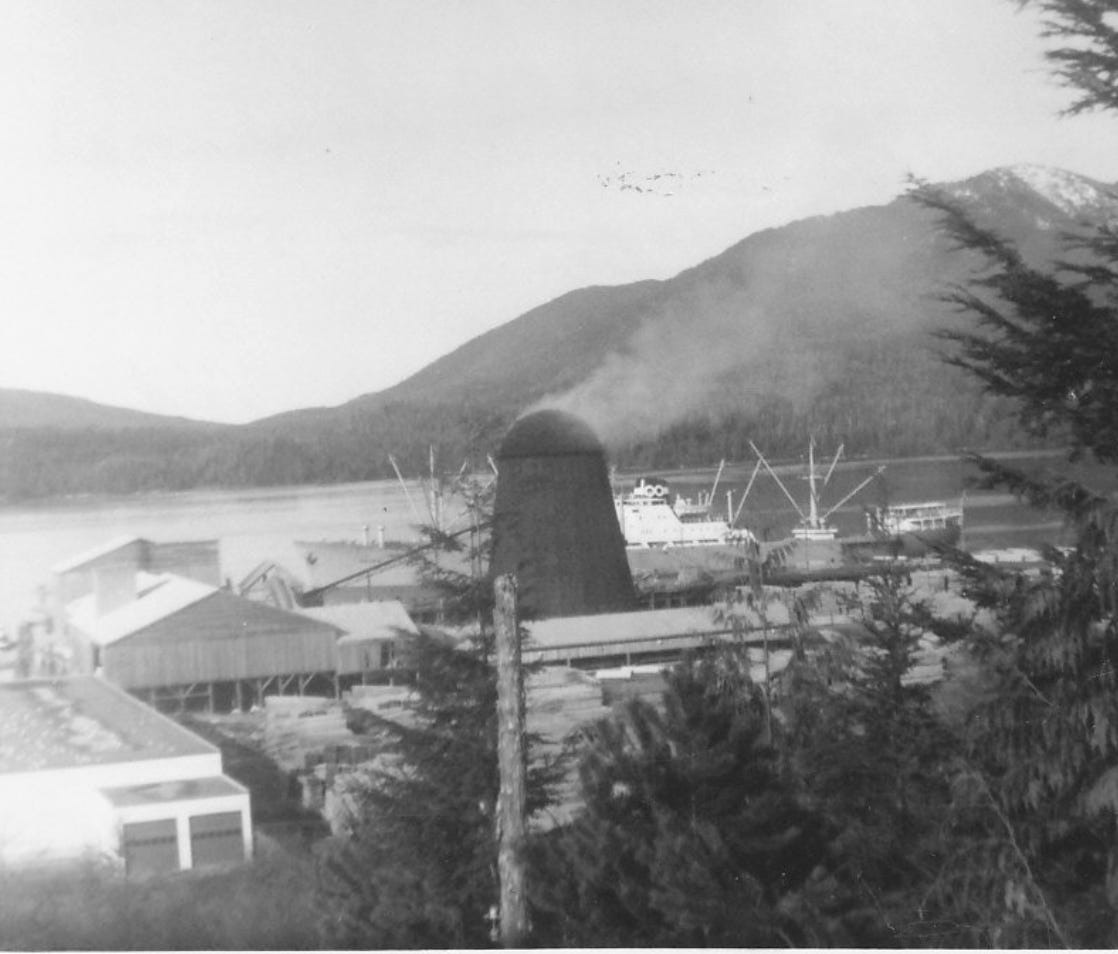
Growing up in mid-late 20th century BC I took sawmill beehive burners in stride. Prince Rupert had a burner on the waterfront mixed in among the docks and fishplants. Prince Rupert wasn’t alone in this regard. On family road trips my mother would keep my sisters and me entertained counting the burners along Highway 16; just the same way we counted out-of-province licence plates. We would often smell the burning sawdust and wood debris before we saw the burners. As the industry changed in tune with markets and evolving social values beehive burners were left to decay, haunting monuments to a stage in the development of BC’s industrial resource economy.
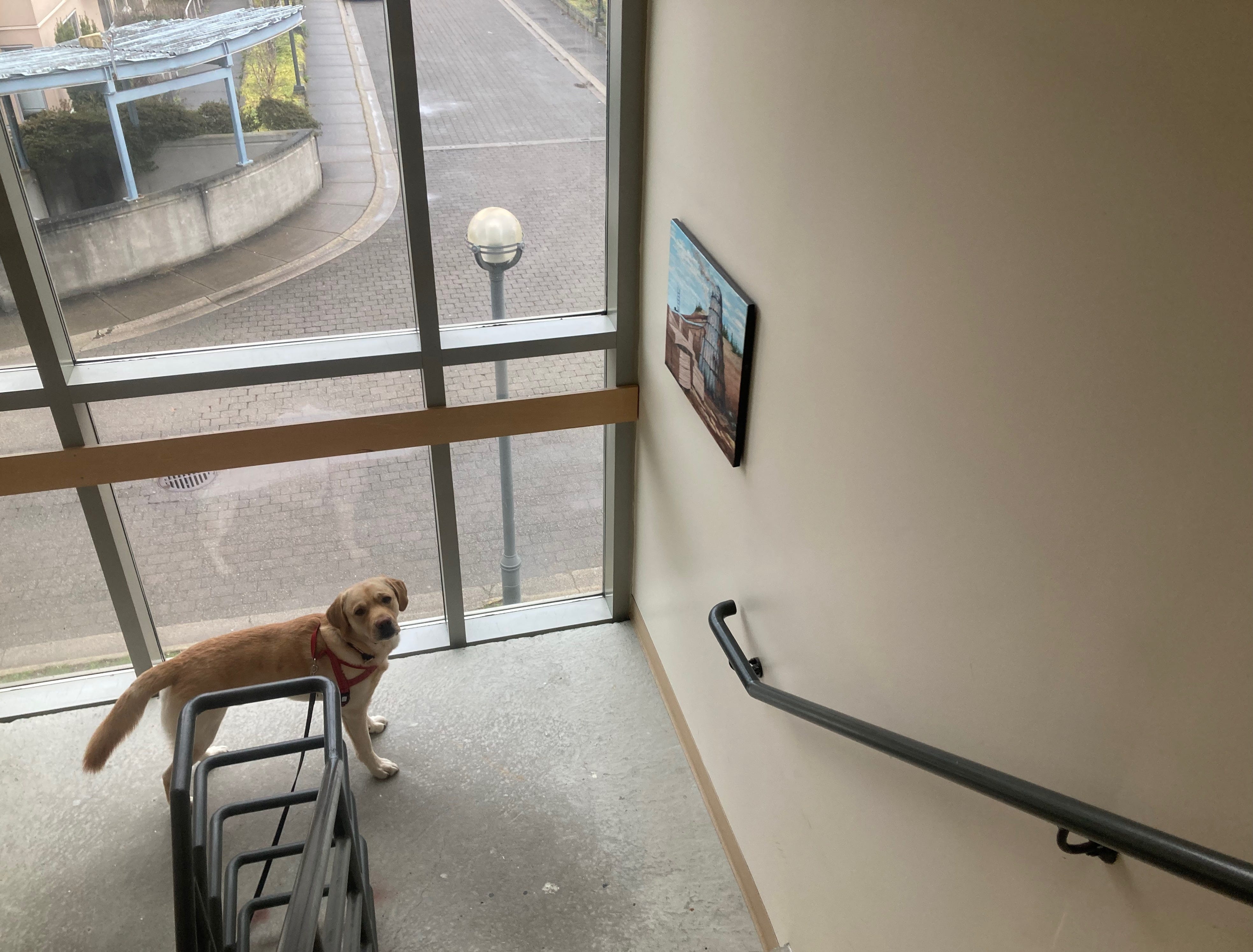
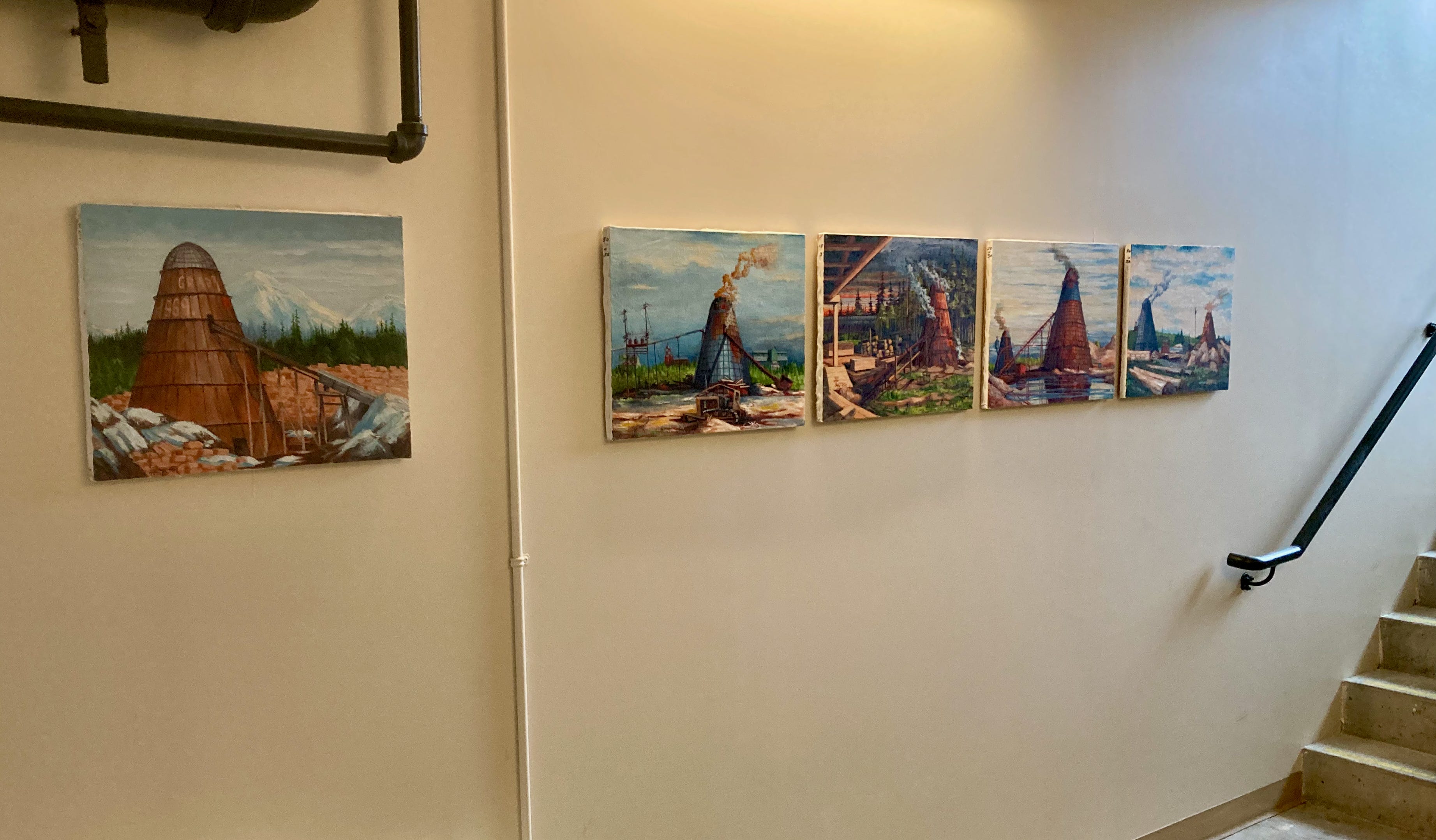
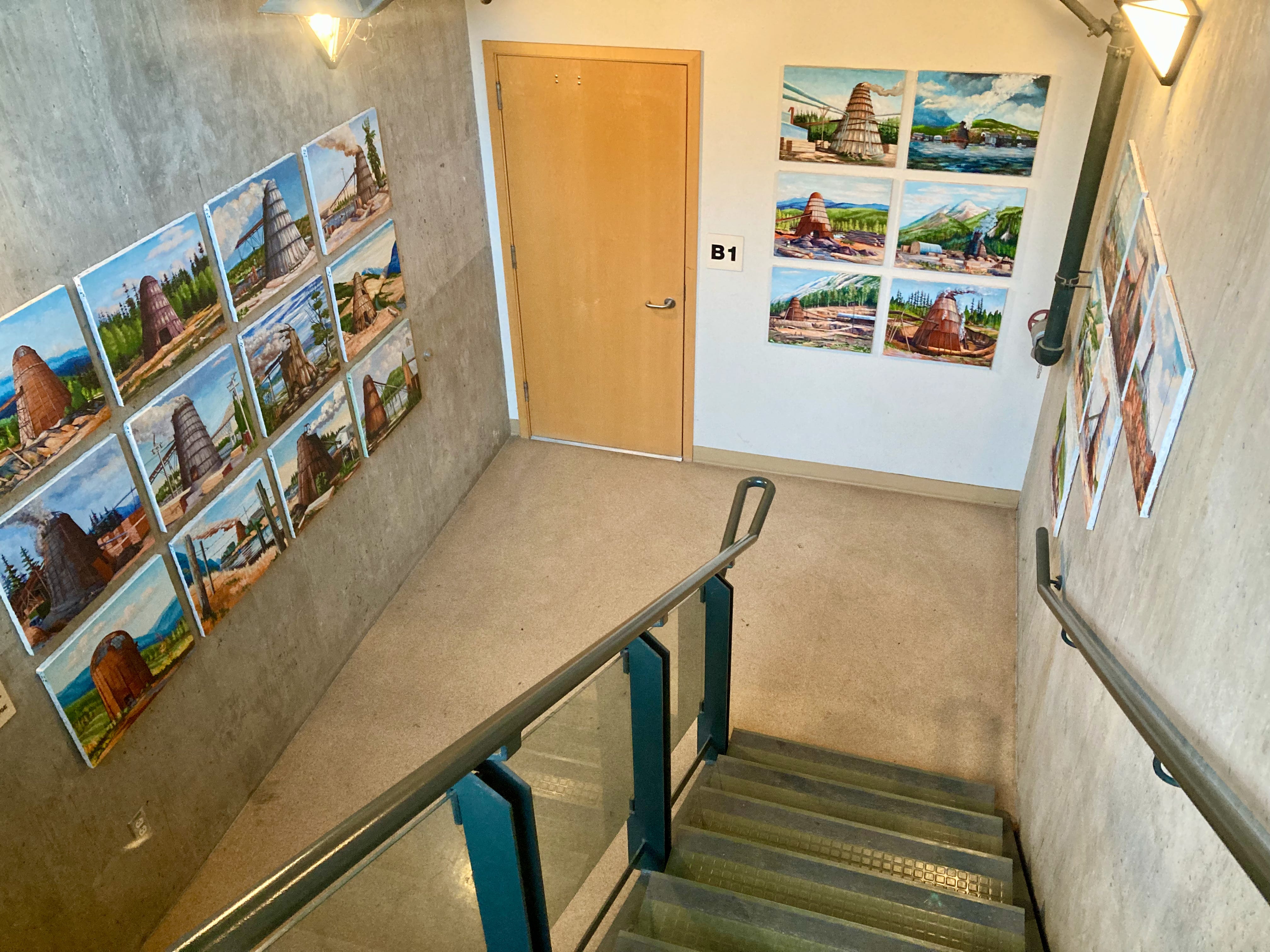
On one of my walks across campus with my dog I came upon a stairway in the Forestry building filled with brilliant hued oil paintings of beehive burners. The dog was sniffing up against the building and I happened to glance in the nearby window. What a site! The door to the building was opened so in we went. The set of paintings I first saw was in an out of the way part of the building. There was no explanatory signage there. At the main entrance where the bulk of the paintings are to be found is a large plaque explaining the provenance of the paintings.
Lou Englehart’s Paintings
Lou Englehart (1915 - 1989) was a BC artist who loved painting mid-twentieth century Canadiana. Born in New Brunswick, settled in BC, Englehart was a man of his time. His son Mark Englehart shared the following summation of Englehart senior’s life:
My dad had once been a cartoonist and before the WWII, he had led the Cartoon Syndicate of Ohio which was the largest cartoon house in North America at the time. They did work for outside companies such as Disney. Dad created several cartoon changes for Disney that are used to this day. After the war my dad became an art teacher in BC. He was originally from New Brunswick, left home at 14 as his dad wanted him out of school and working in his lumber mill, and then moved to Ohio for his employment with the Cartoon Syndicate of Ohio until the war at which time he moved back to Canada. He was an artist, cartoonist, sculptor, performer in arts and a writer. Also he was an editor for a magazine back east and attended the queens visit with a press pass and wrote many articles.
Englehart taught art for 25 years at Cowichan High School and then in Burnaby School District, retiring from the later in 1974.
Englehart spent a decade of his retirement painting BC’s iconic beehive burners. Each painting was done on site with watercolours. He took notes on details at each site. Later, sometimes years later, he would transfer them to oils in his home studio.
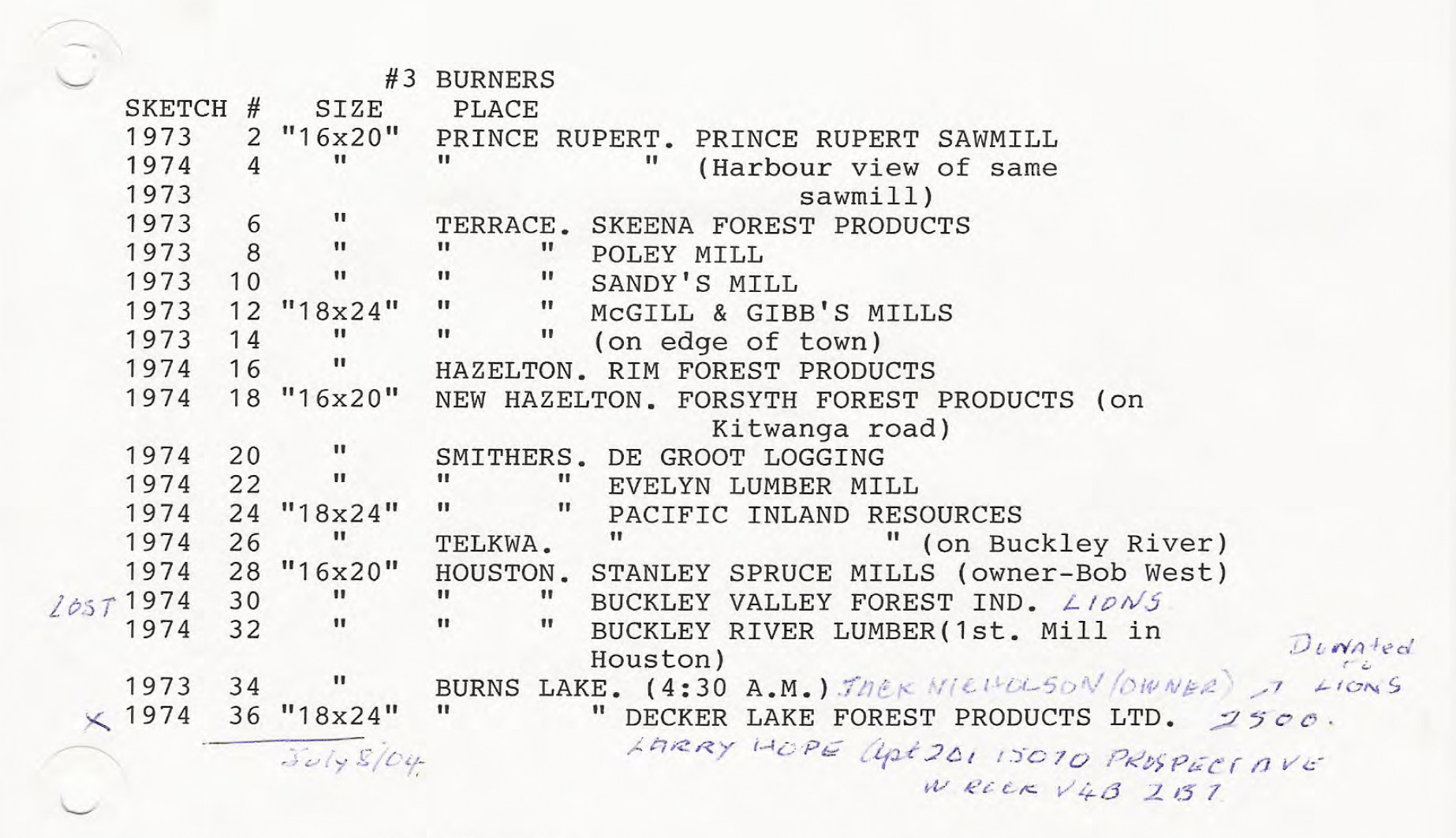
Following his death this series of paintings was in part bequeathed to UBC’s Faculty of Forestry and Environmental Stewardship. Other portions are in museums and archives in Prince George and Victoria. The UBC series of paintings are now on display in the UBC Forest Sciences Centre. Upon their installation Dean Robert Kozak wrote the following tribute which is posted on plaques beside the paintings.
For over 80 years, the beehive burner stood as a potent symbol of the booming British Columbia forest industry. Invented to incinerate waste wood, sawdust, and bark, these conical steel structures rose as high as 30 metres in height and, oftentimes, dominated local landscapes. In many ways, they represented the “engines” that drove BC’s economic engine – the forest products sector.
Beehive burners solved two problems: energy generation and the disposal of wood waste. But they created others in the form of fly ash, pollution, and lower air quality. In 1996, the BC government mandated a phase-out of the burners, with the last ones closed at the end of 2004. Many mills converted to co-generation plants, while others developed biomass energy facilities or commercial streams for waste products.
From 1974 to 1985, Lou Englehart documented these iconic structures with a series of 210 oil paintings. Using strong colours and brushstrokes – evocative of Monet’s haystacks – he tried to show these impressive, but doomed, burners situated within their contexts of sawmills and forest-dependent communities. Forests and mountains are often featured in the backgrounds of these landscapes, while more ephemeral objects, like logs and train tracks, are seen in the foreground, suggesting that these once mighty “engines” are decaying before our very eyes. The viewer is forced to reconcile this symbol of industry prosperity with the realization that the industry must continually evolve.
Louis J. Englehart was born in New Brunswick in 1915. His work as an artist began in 1935 in Ohio, with commercial art and cartooning. He studied at the Vancouver School of Art (now Emily Carr University of Art + Design), graduating in 1949 and had a 25-year career as an art teacher in BC secondary schools. After retiring in 1974, Lou and his wife Della travelled across Canada capturing the vanishing landscapes of BC sawmills, Newfoundland fishing stores, and villages in rural Quebec. Lou died in 1989 and his family generously bequeathed the paintings to the UBC Faculty of Forestry, with the hopes that they would be publicly displayed. Original watercolour studies of this series is now housed in the provincial archive at the Royal BC Museum in Victoria.
“I want the people of British Columbia to come in someday, into a museum or into an enclosure where these beehives will be on exhibition, and be able to see their past heritage.” - Lou Englehart, 1985


In 1985 and 1987 Lou Englehart was interviewed by CBC about his painting.
How to see the paintings
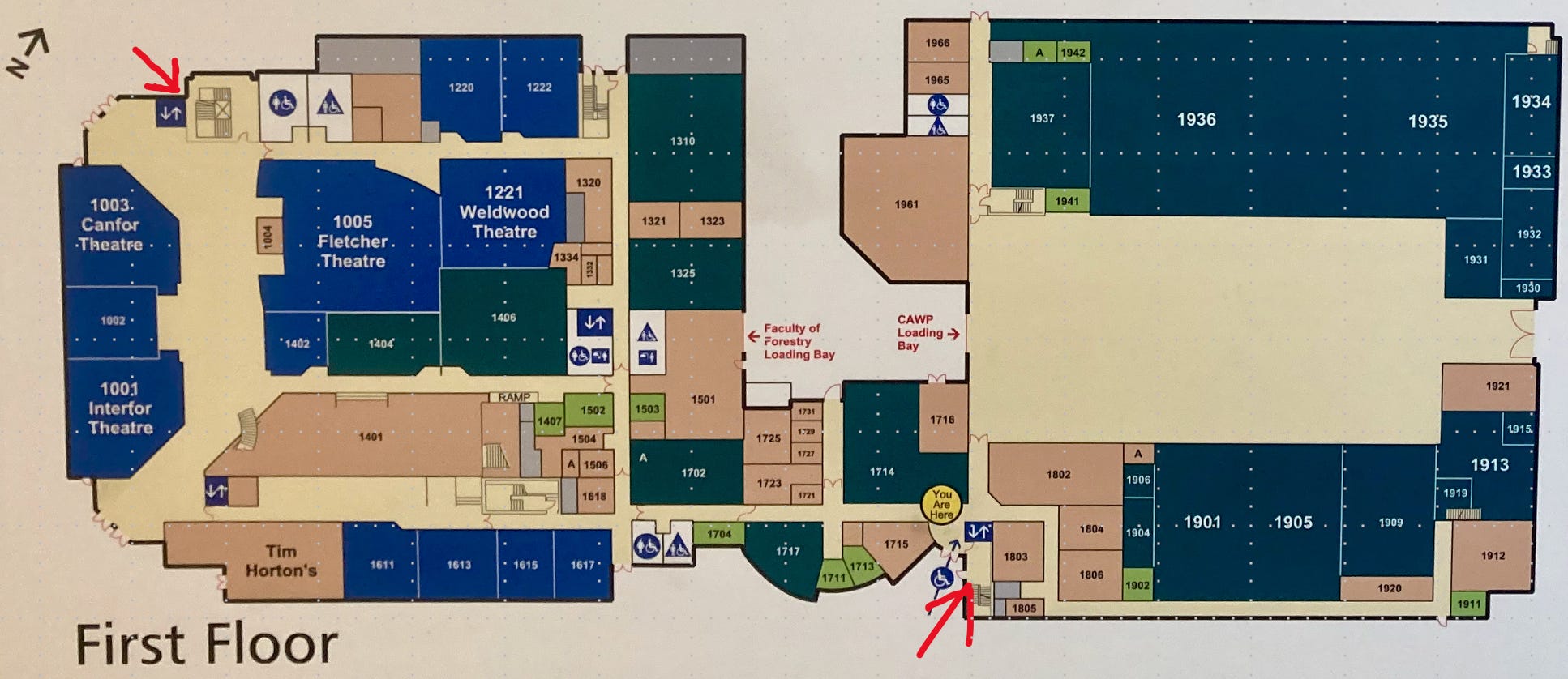
The paintings are installed in two stairways in the UBC Forest Sciences Centre. The majority of the paintings are in an open air stairway on the north-west corner of the building. A smaller set can be found in the south central stairway in the Centre for Advance Wood Science. The Forest Sciences Centre is open to the public most weekdays from 7:30 am till 8:00 pm.


Cool! As a recent immigrant to BC, I've never seen one of these beehive burners. Thanks to this article, I now know their history. I'll look for them as I drive around the province. Also, thanks for introducing us to Jasper. :)
NIce write up. When I see the shapes, I don't see bee hives. I see industrial teepees. I know that is weird, but there it is.